Governance Attacks: How a Vote Can Drain a DeFi Protocol
By Jorge Rodriguez — Risk Management
How governance attacks exploit voting systems to drain protocol funds
Real-world case studies: Beanstalk, Tornado Cash, and Compound
A practical checklist for evaluating governance risk before depositing
Introduction
In April 2022, a single Ethereum transaction drained $181 million from Beanstalk Farms. No smart contract exploit. No private key compromise. Just a governance vote, passed and executed in 13 seconds. The attacker did not break the protocol's code. They used it exactly as designed. They proposed a change, voted for it with borrowed tokens, and the protocol obediently transferred its entire treasury to an address the attacker controlled. The system worked perfectly. That was the problem. **Governance attacks** represent one of the most underappreciated risk vectors in DeFi. Unlike code exploits that target bugs, a governance attack exploits the protocol's own decision-making process. If an attacker gains enough voting weight, the protocol essentially authorizes its own theft. For anyone depositing capital into DeFi protocols, understanding how governance can be weaponized is not optional. It is a core part of [evaluating yield risk](/blog/risk-management/defi-yield-risks-explained). This article breaks down how governance attacks work, walks through the three most consequential real-world cases, and provides a framework for evaluating governance risk before parking capital in any protocol. 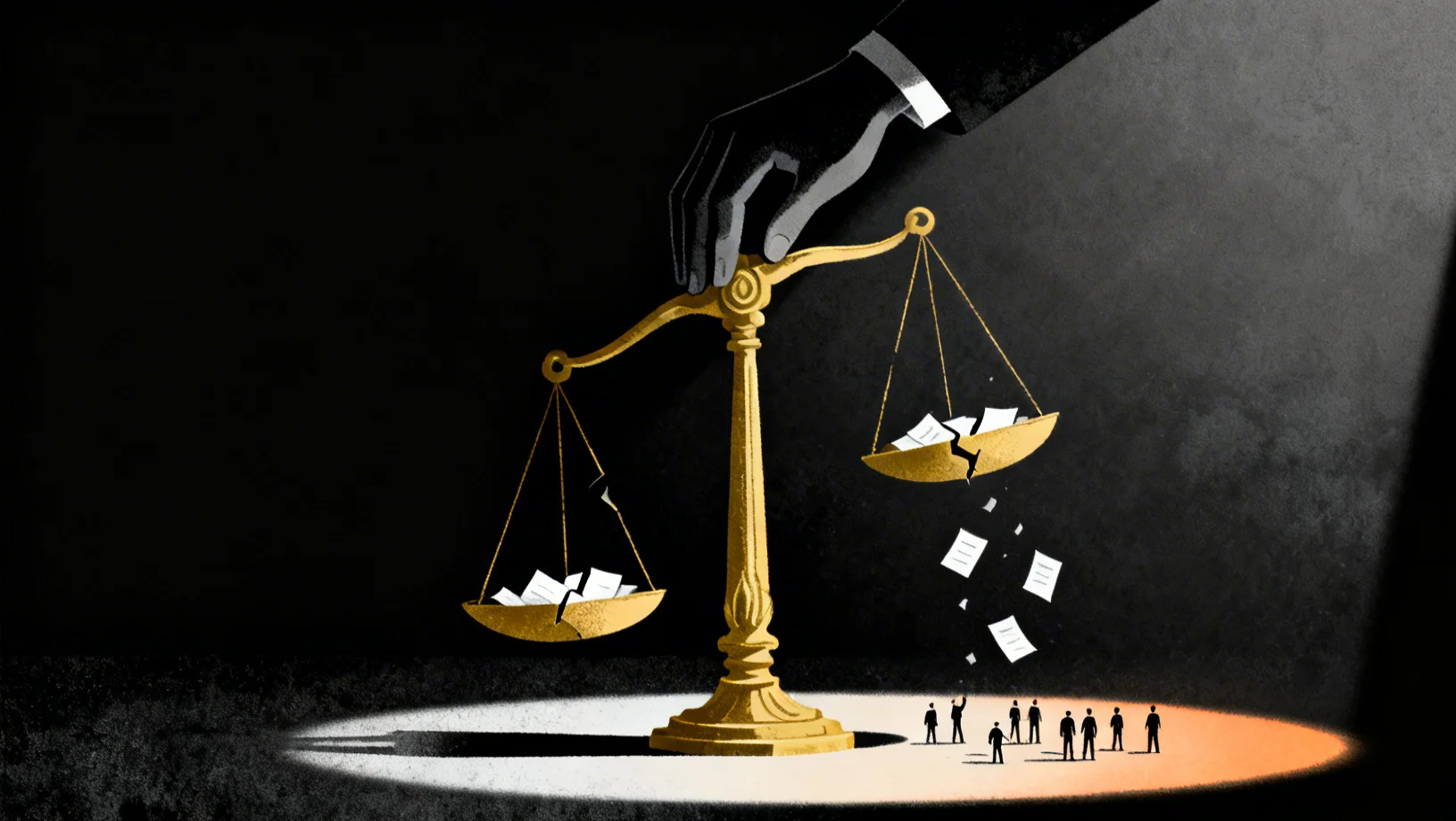
What Is a Governance Attack?
A governance attack exploits a protocol's voting and proposal system to pass changes that benefit the attacker at the expense of the protocol and its depositors. The attacker does not break the smart contracts. They use the governance contracts exactly as intended, but for purposes the community never authorized. This is what makes governance attacks uniquely dangerous. Traditional smart contract exploits target bugs, logic errors, or access control failures. An [audit report](/blog/risk-management/how-to-read-defi-audit-report) can catch those. But governance attacks exploit process, not code. A protocol can have a pristine audit history and still be completely vulnerable to governance capture. **Why governance is an attack surface** Governance systems exist to change protocol behavior. They control fee structures, reward emissions, collateral requirements, treasury allocations, and contract upgrades. That power to change anything is exactly what makes them dangerous. If an attacker accumulates enough voting weight through any means, the protocol will execute whatever they propose. The mechanism that enables community-driven upgrades is the same mechanism that enables community-hostile takeovers. The distinction between a governance attack and a legitimate governance action can be blurry. When a whale pushes through a proposal that benefits them over the community, is that an attack or just aggressive politics? The answer often depends on who you ask, which makes governance risk harder to quantify than a straightforward code vulnerability.
Attack Vectors: How Governance Gets Exploited
Governance attacks are not a single technique. They span a range of approaches, from atomic single-transaction exploits to slow campaigns of accumulation. Understanding each vector helps you assess which protocols are vulnerable to which types of attack.  **Flash loan vote manipulation** A **flash loan** allows an attacker to borrow massive amounts of governance tokens within a single transaction, vote, and return the tokens before the transaction completes. This works when a protocol snapshots voting power at proposal time without requiring tokens to be held beforehand. The attacker never needs to own a single governance token. They borrow, vote, execute, and repay in one atomic operation. The cost of attack is just the flash loan fee (often near zero) plus gas. The Beanstalk exploit is the textbook case: the attacker borrowed over $1 billion in assets, converted them to governance tokens, passed a proposal, drained the treasury, converted back, and repaid the loan. Total out-of-pocket cost: a few hundred dollars in gas. **Malicious proposal injection** In this vector, an attacker submits a **malicious proposal** that appears benign on the surface but contains hidden logic. Community members reviewing the proposal see familiar code that resembles a previously approved change, but the deployed contract includes additional functions that grant the attacker control. This exploits the reality that most token holders do not read proposal code, and even those who do may miss subtle differences. **Whale accumulation and voting bloc capture** **Whale accumulation** is the slow-burn version of a governance attack. An entity gradually buys governance tokens on the open market until they hold enough to pass proposals unilaterally. Unlike flash loan attacks, this requires real capital and patience. But it is also harder to defend against, because buying tokens is perfectly legitimate activity. The line between "active governance participant" and "hostile acquirer" is drawn by intent, which is invisible on-chain. **Delegate capture and social engineering** Instead of buying tokens, an attacker can target **delegates**, addresses that hold voting power delegated by other token holders. Many governance systems have highly concentrated delegation, where a handful of addresses control the majority of voting power. Compromising, coercing, or socially engineering these delegates can be cheaper than acquiring tokens directly. Inactive delegates with large delegations are especially attractive targets. **Parameter manipulation (slow-drain attacks)** **Parameter manipulation** is the subtlest form of governance attack. Rather than draining a treasury in one shot, the attacker passes proposals that gradually shift protocol parameters in their favor: changing fee recipients, adjusting collateral factors, modifying interest rate models, or redirecting reward emissions. Each individual change may appear minor and pass without scrutiny. The cumulative effect over weeks or months can be substantial.
Case Studies: Real-World Governance Attacks
Theory only goes so far. The clearest way to understand governance risk is to examine the attacks that actually happened, how they worked, and what made each protocol vulnerable.  **Beanstalk: $181M drained in 13 seconds** In April 2022, an attacker submitted two proposals to Beanstalk Farms: BIP-18 and BIP-19. BIP-18 proposed transferring the protocol's entire reserves to the attacker's wallet. BIP-19 donated $250,000 to Ukraine's war relief fund, adding a veneer of legitimacy. The attacker then executed the attack in a [single transaction](https://medium.com/immunefi/hack-analysis-beanstalk-governance-attack-april-2022-f42788fc821e). They took flash loans totaling over $1 billion from Aave, Uniswap, and SushiSwap. They deposited the borrowed funds into Beanstalk's Silo to acquire governance tokens, reaching the two-thirds supermajority needed for emergency execution. They voted for BIP-18, which passed and executed instantly because Beanstalk had no **timelock** delay on emergency proposals. They withdrew the drained funds and repaid all loans within the same transaction. The entire process took 13 seconds. The protocol lost $181 million. The critical failure was the absence of a timelock on emergency governance execution combined with same-block vote snapshots that allowed flash-loaned tokens to count as voting power. **Tornado Cash: Hidden code, total DAO takeover** In May 2023, an attacker submitted a governance proposal to the Tornado Cash DAO that [appeared identical to a previously approved proposal](https://www.coindesk.com/tech/2023/05/21/attacker-takes-over-tornado-cash-dao-with-vote-fraud-token-slumps-40). The submitted code looked clean. But the deployed contract contained hidden logic that granted 1.2 million TORN tokens in fake voting power to attacker-controlled addresses. With this manufactured majority, the attacker gained full control of the DAO. They could modify any parameter, drain any connected funds, and alter the protocol's logic at will. The TORN token price dropped approximately 40% on the news. The attacker eventually returned governance control, but the damage was done. The incident exposed a fundamental weakness in **proposal injection** attacks: most token holders vote based on proposal descriptions, not bytecode verification. A proposal that "looks like" a safe one can contain anything. **Compound/Humpy: The gray zone** The Compound governance controversy illustrates the blurry line between a governance attack and aggressive but legitimate governance participation. In mid-2024, a whale known as "Humpy" [accumulated enough COMP tokens to pass Proposal 289](https://www.theblock.co/post/307943/24-million-compound-finance-proposal-passed-by-whale-over-dao-objections), which directed $24 million in COMP tokens to a yield vault under their influence. The community objected vocally, but lacked the votes to block the proposal. Humpy held enough tokens to pass it unilaterally. The situation was eventually resolved through negotiation rather than code, with Humpy agreeing to a modified arrangement. But the incident demonstrated a structural weakness in token-weighted voting: when one entity can outvote everyone else, governance becomes an exercise in capital, not consensus. This case is important because it is not clearly an "attack" in the traditional sense. Humpy used the governance system as designed. The problem is that the system's design allows capital concentration to override community intent.
Why Governance Attacks Matter for Yield Depositors
If you deposit capital into a DeFi protocol, you are implicitly trusting its governance system. That trust is a form of [counterparty risk](/blog/risk-management/counterparty-risk-defi) that most yield farmers never evaluate. **Your yield depends on governance decisions** Fee structures, reward emissions, collateral requirements, treasury allocations, and protocol upgrades are all governance-controlled parameters. A governance attack can redirect the very yield you are farming. If a proposal changes the fee recipient, your LP fees flow to someone else. If a proposal adjusts collateral factors, your lending position faces different liquidation terms than when you entered. The yield you see today exists only as long as governance does not change it. **Governance risk compounds with other vectors** Governance attacks are harder to detect through standard due diligence than other exploit types. A protocol audit examines code, not governance process. A high TVL signals market confidence, not governance robustness. You can follow a thorough [DeFi due diligence checklist](/blog/risk-management/defi-due-diligence-checklist) and still miss governance vulnerability if you are not specifically looking for it. Governance risk also interacts with other risk vectors in dangerous ways. A governance attack can trigger [protocol insolvency](/blog/risk-management/defi-protocol-insolvency-risk) if the treasury is drained. It can resemble a [rug pull](/blog/risk-management/rug-pull-vs-exploit-vs-bug-defi) when insiders manipulate governance to extract funds. When you are [managing risk across multiple positions](/blog/risk-management/defi-risk-management-multiple-positions), governance risk at one protocol can cascade into losses across your portfolio. Tools like the [Lince Yield Tracker](https://yields.lince.finance/tracker) help you cross-reference yield data across protocols, but no yield dashboard can substitute for evaluating governance design directly. The next section provides a framework for doing exactly that.
How to Evaluate Governance Risk Before Depositing
Before depositing into any DeFi protocol, evaluate its governance design across six key dimensions. Each one addresses a specific attack vector.  **Timelock duration** A timelock enforces a delay between a proposal passing and its on-chain execution. Beanstalk had no timelock for emergency proposals. Most battle-tested protocols enforce 24 to 72 hours. This delay gives the community time to detect malicious proposals, organize opposition, or withdraw funds before the proposal executes. Longer timelocks provide more safety but create tradeoffs for genuine emergency response. What to check: • Look for the timelock duration in the protocol's governance documentation or directly in the smart contract • If there is no timelock, or if emergency proposals can bypass it, treat the protocol as high governance risk • Check whether emergency proposals can bypass the standard timelock, as this was the exact vulnerability that enabled the Beanstalk exploit **Quorum and voting thresholds** A **quorum** is the minimum participation required for a vote to be valid. Low quorum combined with concentrated token supply creates vulnerability. If a protocol requires only 4% of tokens to participate for a valid vote, and a whale holds 5%, that whale effectively has unilateral control. What to check: • The quorum percentage AND the absolute token count relative to circulating supply • Whether the quorum is measured by unique voters or total voting power, since these produce very different security properties • Historical voter turnout on past proposals, which reveals whether the quorum is genuinely protective or routinely just barely met **Token distribution and whale concentration** If a single entity or small group holds enough tokens to pass proposals unilaterally, governance is centralized regardless of the DAO label. On-chain analysis tools like Etherscan and Solscan show top holder distributions. A protocol where the top 10 addresses control over 50% of governance tokens has concentrated governance, even if it calls itself a DAO. **Vote-escrow locking (veToken model)** Protocols that use a **vote-escrow (veToken)** model require tokens to be locked for extended periods before granting voting power. Curve's veCRV model requires up to four years of locking. This makes flash loan attacks structurally impossible because borrowed tokens cannot be locked and used for voting within a single transaction. The longer the lock requirement, the higher the economic cost of a governance attack. **Emergency guardian or veto mechanism** Some protocols include an **emergency guardian**, a multisig or security council with narrow authority to veto or pause malicious proposals. This trades some decentralization for safety. The key question is whether the guardian's power is scoped narrowly (can only veto, cannot propose) and whether the guardian members are publicly known and accountable. **Snapshot vs on-chain voting** **Snapshot voting** records preferences off-chain and relies on a multisig to execute the result on-chain. **On-chain voting** auto-executes proposals that pass. Both models carry risks. Snapshot depends on the multisig to honestly execute community decisions. On-chain governance auto-executes malicious proposals that pass the quorum threshold. Neither model is inherently safer; they just have different trust assumptions. **Quick reference checklist** | Criterion | Lower Risk | Higher Risk | |---|---|---| | Timelock | 48-72 hours | None or bypassable | | Quorum | Above 10% of supply | Below 4% of supply | | Token distribution | Top 10 hold under 30% | Top 10 hold over 50% | | Vote locking | veToken with 1+ year lock | No lock requirement | | Guardian | Scoped veto power | No guardian mechanism | | Voting model | Timelock + guardian combo | Auto-execute, no delay |
FAQs
### What is a governance attack in DeFi? A governance attack exploits a protocol's own voting and proposal system to pass changes that drain funds, redirect rewards, or alter parameters against the community's interest. Unlike smart contract exploits that target code bugs, governance attacks use the system as designed but for hostile purposes. The attacker gains enough voting power to push through proposals that benefit them at the expense of other users. ### How did the Beanstalk governance attack work? The attacker took flash loans totaling over $1 billion, deposited into Beanstalk's Silo to acquire governance tokens, voted for a proposal that transferred the entire treasury to their wallet, and repaid the loans. The full attack happened in a single transaction lasting 13 seconds. It was possible because Beanstalk had no timelock delay on emergency proposals and allowed flash-loaned tokens to count as voting power. ### Can flash loans be used to manipulate DAO votes? Yes, if the protocol snapshots voting power at the time of the vote without requiring prior token holding or locking. Flash loans let an attacker borrow governance tokens, vote, and return them in one transaction at near-zero cost. Protocols that use vote-escrow models (requiring tokens to be locked for weeks or months) are immune to flash loan voting attacks because borrowed tokens cannot be locked within a single transaction. ### What is the difference between a governance attack and a rug pull? A rug pull involves protocol creators or insiders abandoning a project and taking user funds, often by draining liquidity pools or using admin keys. A governance attack uses the protocol's public voting mechanism to pass proposals that redirect funds. The key difference is the vector: rug pulls exploit privileged access, while governance attacks exploit the voting system itself. In practice, the financial outcome for depositors can be similar. ### How do timelocks protect against governance attacks? A timelock enforces a mandatory delay between a governance proposal passing and its execution on-chain. This gives the community time to review the proposal, organize opposition, or withdraw funds before a malicious change takes effect. Without a timelock, an attacker can propose, vote, and execute a treasury drain in a single transaction, as happened with Beanstalk. ### What is vote-escrow (ve) locking and how does it prevent governance exploits? Vote-escrow locking requires governance token holders to lock their tokens for an extended period (weeks to years) before gaining voting power. This prevents flash loan attacks because borrowed tokens cannot be locked within a single transaction. It also increases the cost of whale accumulation attacks, since the attacker's capital is locked and illiquid during the attack period. Curve Finance pioneered this model with veCRV. ### How can I check if a DeFi protocol is vulnerable to governance attacks? Check six things: whether the protocol has a timelock (and how long), the quorum threshold relative to circulating supply, token distribution among top holders, whether voting requires token locking, whether an emergency guardian or veto mechanism exists, and whether voting is on-chain with auto-execution or off-chain via snapshot. Protocols with no timelock, low quorum, concentrated token supply, and no vote-locking are the most vulnerable. ### Are governance attacks covered by DeFi insurance? Coverage varies by provider and policy. Most DeFi insurance protocols (like Nexus Mutual) focus on smart contract exploit coverage. Governance attacks occupy a gray area because the protocol's code functions as intended; the exploit is in the governance process. Some policies explicitly exclude governance-related losses. Always read the specific terms and exclusions of any DeFi insurance policy before assuming coverage applies to governance events.
Conclusion
Governance is a feature, not a bug. But every feature that can change protocol behavior is a potential attack surface. Flash loan voting, malicious proposal injection, whale accumulation, delegate capture, and parameter manipulation are all ways that governance systems can be turned against the communities they are supposed to serve. For yield depositors, governance risk is a form of counterparty risk that standard audits do not catch and yield dashboards do not display. The protocols where you park capital can change their rules at any time through governance, and whether those changes serve the community or a single attacker depends entirely on the governance design. Before depositing into any protocol, evaluate the six governance criteria covered in this article: timelock duration, quorum thresholds, token distribution, vote-escrow locking, guardian mechanisms, and voting model. A protocol that scores poorly across multiple dimensions is a protocol where your capital is one proposal away from redirection. Cross-reference governance risk with yield data across protocols on the [Lince Yield Tracker](https://yields.lince.finance/tracker) to make informed deposit decisions. The few minutes spent evaluating governance design can save you from becoming the next case study.