Yield Sustainability in DeFi: How to Know if an APY Will Last
By Jorge Rodriguez — Yield Strategies
A taxonomy of five yield sources ranked by durability, from protocol fees to leverage-amplified returns
The four-phase yield lifecycle model for predicting where any protocol's APY is heading
A ten-item sustainability checklist you can apply before depositing into any pool
Why Sustainable Yield Is the Only Yield That Matters
A 50% APY means nothing if it drops to 3% within a month. For experienced DeFi users, finding high yields is the easy part. The real skill is recognizing which ones will hold. Every yield opportunity in DeFi exists on a spectrum from fully fee-backed to entirely emission-funded. Most sit somewhere in between, and that position shifts over time. The protocols that survive multiple market cycles tend to share common traits: transparent revenue sources, predictable emission schedules, and sticky depositor bases. This guide provides a framework for evaluating sustainable yield in DeFi before you commit capital. It covers a yield source taxonomy, a lifecycle model for predicting APY trajectories, five quantitative metrics that signal durability, historical case studies showing what yield decay actually looks like, and a repeatable checklist you can apply to any protocol on any chain. 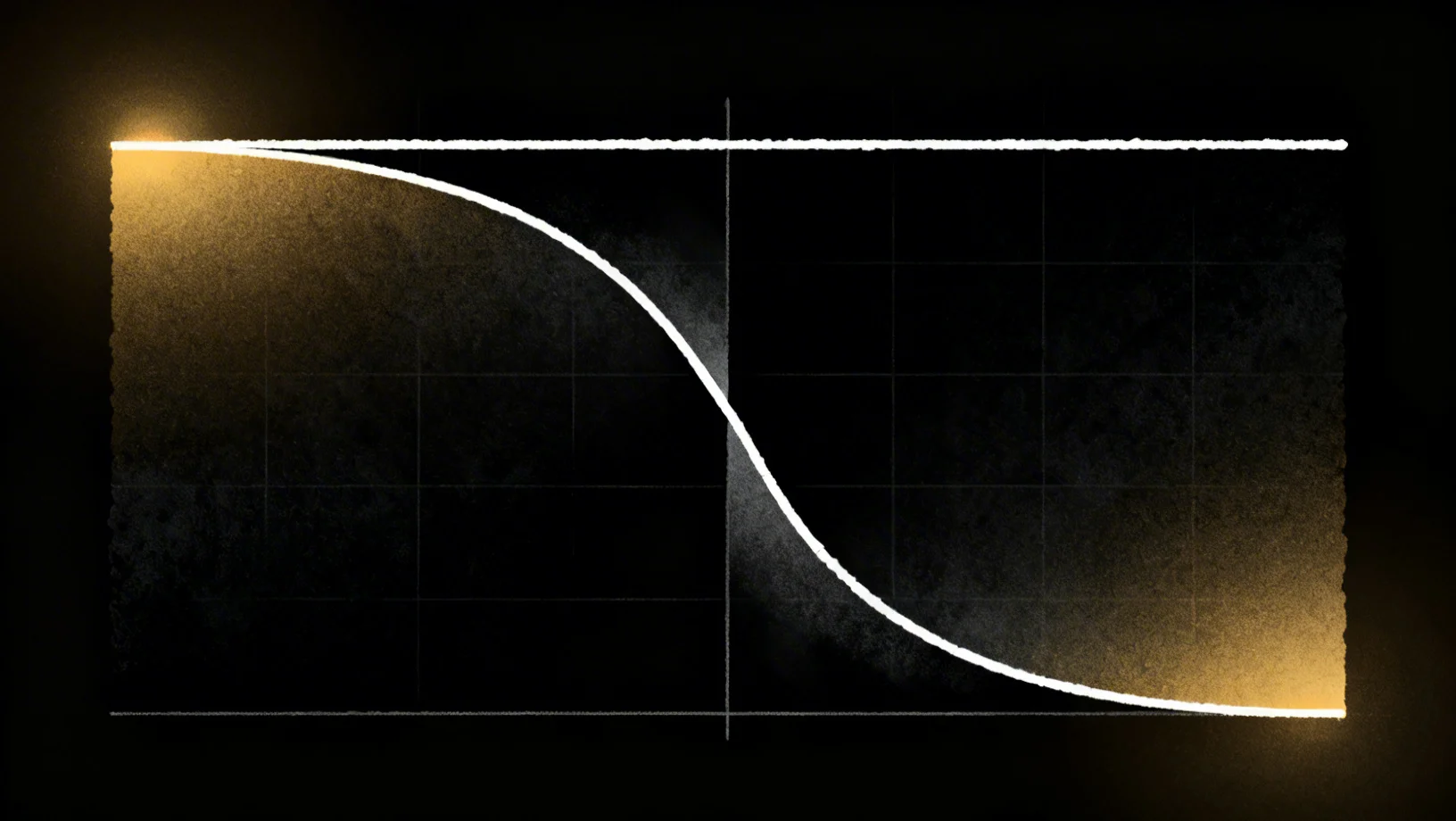 The goal is not to avoid all emission-funded yields. Some of the best risk-adjusted returns come from Phase 1 protocols with aggressive incentive programs. The goal is to understand exactly what you are earning, why it exists, and when it will change. If you have not already explored the broader landscape of [yield-bearing assets across chains](/blog/yield-strategies/yield-bearing-assets), that context will help frame the taxonomy below.
The Yield Source Taxonomy
The single most predictive factor for sustainability is the source of the yield. Before evaluating metrics, lifecycle stage, or depositor behavior, categorize every opportunity into one of five sources. **Protocol Revenue (Trading Fees, Lending Spreads, Liquidation Fees)** This is the most durable yield source in DeFi. It comes from actual usage: traders paying swap fees, borrowers paying interest, liquidations generating penalty fees. Uniswap LP fees, Aave lending spreads, and GMX trading fees all fall here. Typical range: 2 to 15% APY. This yield compresses as more liquidity enters a pool (the denominator grows), but it rarely collapses entirely because it reflects genuine economic activity. If borrowing demand on Aave drops to zero, lending yield drops to zero. But as long as people borrow, lenders earn. **Staking Rewards (Network Security Incentives)** Moderately durable. Validators secure proof-of-stake networks, and staking rewards compensate them for that service. ETH staking yields roughly 3 to 4% APY. Solana staking yields 6 to 7% before MEV tips. These rewards are emission-funded (inflationary), but they serve a structural purpose: network security. The key distinction is inflation-adjusted yield. If a network inflates at 5% and staking yields 6%, your real return is roughly 1%. Sustainability depends on the network's long-term inflation schedule, which is typically public and predictable. **Token Emissions (Liquidity Mining, Incentive Programs)** The least durable by default. Protocols print governance tokens and distribute them to attract TVL. This yield has a built-in expiration date: the emission schedule. When emissions halve or end, yield drops proportionally. Some protocols use emissions successfully to bootstrap genuine usage (Curve's early CRV rewards attracted volume that generated real fees). Others create a cycle of [mercenary capital](/blog/risk-management/defi-yield-risks-explained) that exits the moment incentives slow. **Points and Airdrop Speculation** This is not yield at all in any economic sense. Users perform actions (depositing, trading, bridging) in exchange for "points" that may convert to a future token airdrop. The implied APY is speculative: it depends on the token's eventual valuation, the total point supply, and whether the protocol actually launches a token. This "yield" collapses when the airdrop ships, expectations shift, or the protocol pivots. Treat it as a bet, not income. **Leverage-Amplified Yield** Borrowing to multiply a base yield. If JitoSOL earns 7% and you loop it three times, the gross yield rises, but so does liquidation risk, borrowing cost, and smart contract exposure. The sustainability of leveraged yield depends entirely on the sustainability of the underlying source. Leverage does not create yield; it amplifies whatever is already there, including the risks. For a deeper look at what can go wrong, see the guide on [leveraged yield farming risks](/blog/risk-management/leveraged-yield-farming-risks). | Yield Source | Durability | Typical APY Range | Compression Driver | Example Protocols | |---|---|---|---|---| | Protocol revenue | High | 2-15% | More LPs entering | Uniswap, Aave, GMX | | Staking rewards | Medium-High | 3-9% | Inflation schedule | Lido, Jito, Rocket Pool | | Token emissions | Low | 10-100%+ | Emission schedule | Early Curve, SushiSwap | | Points/airdrops | Very Low | Speculative | Airdrop event | Various pre-token protocols | | Leverage-amplified | Depends on base | Variable | Base yield + rates | Kamino Multiply, Aave loops |
The Yield Lifecycle: Where Is This Protocol?
Every yield opportunity passes through a predictable lifecycle. Understanding where a protocol sits in this cycle is the most actionable insight for predicting APY durability.  **Phase 1: Launch Incentives (High APY, Low TVL)** The protocol launches with aggressive emissions to attract initial capital. APYs look incredible because TVL is small: $1 million in incentives distributed across $10 million in TVL produces 10% APY from emissions alone, on top of any base yield. This phase is inherently temporary. It typically lasts 1 to 6 months. The opportunity: if the underlying product has genuine utility, early depositors capture the best risk-adjusted returns. The risk: most protocols never transition beyond this phase. **Phase 2: Growth and TVL Expansion** Capital floods in as the high APY attracts attention. Yield compresses because the same incentive pool now spreads across more deposits. A pool that showed 80% APY at $10 million TVL might show 15% at $200 million. This phase separates healthy protocols from hollow ones. Healthy growth means organic usage (trading volume, borrowing demand) is growing alongside TVL. The base fee yield holds or increases even as emission-driven yield compresses. Unhealthy growth is purely TVL chasing emissions, with no corresponding usage increase. When you see TVL rising but protocol revenue flat, the growth is mercenary. **Phase 3: Maturity and the Fee Transition** Emissions reduce per the published schedule. Yield increasingly depends on protocol revenue. This is the sustainability test. Protocols that built genuine product-market fit during Phases 1 and 2 survive this transition. Aave's lending spreads held. Curve's trading fees provided a floor. GMX's fee distribution to stakers remained viable. Protocols that failed this transition saw capital flight. When emissions dropped, TVL left. When TVL left, fee yield per remaining depositor sometimes temporarily spiked (smaller denominator), but the protocol was in decline. **Phase 4: Steady State or Death Spiral** Two outcomes diverge here. Steady state means yield stabilizes at a sustainable level: primarily fee-backed, supplemented by moderate ongoing emissions if the token economy supports them. These protocols deliver 3 to 12% APY that can persist for years. The alternative is a **death spiral**: emissions end or become negligible, fees are insufficient to retain capital, TVL exits, fewer deposits mean less liquidity and worse execution, which drives away users, which reduces fee revenue further. Each step reinforces the next. The yield lifecycle is a one-way door once this loop begins.
Five Metrics That Predict Yield Durability
Qualitative assessment of yield sources and lifecycle phases gives you direction. These five metrics give you numbers. **1. Revenue-to-Emission Ratio** Protocol revenue divided by the dollar value of token emissions over the same period. A ratio above 1.0 means the protocol earns more from fees than it distributes in token incentives. This is the strongest quantitative signal of yield sustainability. Below 0.5 is a warning that the protocol depends heavily on printing tokens to attract capital. You can find this data on [Token Terminal](https://tokenterminal.com/) and DefiLlama's fees dashboard. **2. Emission Schedule and Remaining Runway** Every protocol with token emissions publishes an emission schedule (or should). Read the tokenomics docs. Key questions: when do emissions halve? When do they end entirely? What percentage of total supply is already circulating? A protocol with 90% of tokens already emitted has limited dilution ahead. One at 30% circulating has 70% of emissions still to come, meaning current yields are heavily subsidized and will compress as tokens unlock. **3. TVL Trajectory vs. Yield Trend** Plot TVL and yield on the same timeline. Three patterns emerge: • Rising TVL with stable or slowly declining yield: healthy growth. More capital is entering, but usage is scaling proportionally. • Falling TVL with declining yield: capital flight. Depositors are leaving and yield is dropping, which causes more depositors to leave. • Rising TVL with rapidly falling yield: dilution faster than growth. Capital is flooding in purely for emissions, compressing returns without adding proportional usage. The [Lince Tracker](https://yields.lince.finance/tracker) lets you compare yield sources and TVL trends across protocols to spot these patterns before committing capital. **4. Fee Yield as a Percentage of Total Yield** What share of the advertised APY comes from actual fees versus emissions? A pool showing 20% APY where 15% is emissions and 5% is fees will compress to roughly 5% when emissions end. Many protocol dashboards now break this out. If they do not, that opacity itself is a signal. DefiLlama Yields provides historical APY data with breakdowns for many protocols. **5. Capital Stickiness (Depositor Behavior)** Large, frequent withdrawals immediately after reward harvests signal mercenary capital. These depositors are farming emissions with no intention of staying. Stable deposit bases with long holding periods suggest genuine conviction in the protocol's value. On-chain analytics tools like Dune dashboards can reveal depositor behavior patterns, including average hold times and withdrawal timing relative to reward distributions.
Historical Patterns: What Yield Decay Actually Looks Like
Theory is useful. Case studies make it concrete. Three historical patterns illustrate how yield sustainability plays out in practice.  **Anchor Protocol: The Fixed-Rate Illusion** Anchor offered a fixed 19.5% APY on UST deposits. The yield was funded by borrower interest and, critically, by a yield reserve that subsidized the gap. The protocol's fee income never came close to covering the advertised rate. At its peak, Anchor paid out roughly $20 million per week in excess yield over what borrowers generated. The yield reserve drained predictably. When it depleted faster than expected and the Luna Foundation Guard stopped replenishing it, the model became visibly unsustainable. The subsequent UST depeg and Terra collapse destroyed roughly $40 billion in value. The lesson: a fixed high APY with no transparent, sufficient fee revenue is a countdown timer. If you cannot identify the revenue source that covers the advertised yield, you are the revenue source. **Curve Finance: Fee Yield That Survived Emissions Compression** Early Curve LPs earned triple-digit APYs from CRV emissions. As the emission schedule reduced rewards, yield compressed dramatically. But Curve had built something Anchor did not: genuine product-market fit. The protocol captured real DEX volume because its stableswap algorithm offered the best execution for stablecoin trades. Fee-based yield remained after emissions compressed. Major pools settled at 2 to 8% APY backed by trading fees, supplemented by moderate CRV emissions that the veCRV governance mechanism made productive. Curve survived the Phase 3 transition because its fee revenue provided a floor. **Aave and Compound: The Lending Rate Floor** Lending yields on Aave and Compound are tied directly to borrowing demand. During bear markets, utilization drops and yields compress to 1 to 3%. During bull markets, borrowing demand surges and yields rise to 5 to 12% for stablecoins. The pattern is mean-reverting and cyclical, closely correlated with broader market activity. Neither protocol has ever experienced a yield "collapse" in the Anchor sense because the yield was never subsidized beyond what borrowers actually paid. The APY is volatile but structurally sound. Aave has operated continuously since 2020 through multiple market cycles. **The 90-Day Emission Cliff** Across dozens of protocols, a consistent pattern emerges: 50 to 70% of TVL exits within 30 days of a major emission program ending. The yield "cliff" when incentives stop is predictable and, for informed users, tradeable. Experienced depositors position before the cliff (capturing high emission-funded yields) and exit before the capital flight begins. Understanding emission schedules is not optional; it is the difference between timing the exit and becoming the exit liquidity.
The Sustainability Checklist
The taxonomy, lifecycle, and metrics above compress into a repeatable ten-item checklist. Apply this before depositing into any yield opportunity and periodically while holding.  • Where does the yield come from? Fees score strong. Emissions score conditional. Points score weak. • What is the revenue-to-emission ratio? Above 1.0 scores strong. Between 0.5 and 1.0 scores moderate. Below 0.5 scores weak. • What percentage of total APY is fee-based? Above 50% scores strong. Between 25% and 50% scores moderate. Below 25% scores weak. • Where is the protocol in the yield lifecycle? Phase 3 or later is safer. Phase 1 carries the highest risk of compression. • What does the emission schedule show for the next 6 to 12 months? Flat or declining emissions are predictable. A cliff event is high risk. • Is TVL growing, stable, or declining? Growing signals health. Declining TVL combined with declining yield is an exit signal. • Has the protocol survived a full market cycle? Yes means battle-tested. No means unproven under stress. • Are depositors sticky or mercenary? Long hold times signal conviction. Harvest-and-dump patterns signal fragility. • Has the protocol been audited by reputable firms, and is the team known? Both present reduce rug risk. For a broader security evaluation, see the [DeFi due diligence checklist](/blog/risk-management/defi-due-diligence-checklist). • Can you articulate why this yield exists in one sentence? If you cannot explain the economic reason the yield exists, you do not understand the risk you are taking. Scoring is deliberately simple: strong, moderate, or weak for each item. A protocol scoring strong on 7 or more items is a fundamentally different proposition than one scoring strong on 3. No single item is disqualifying on its own, but clusters of weak scores compound into real danger.
Common Yield Traps Experienced Users Still Fall For
Knowing the framework does not make you immune to these patterns. They catch experienced users because they look reasonable on the surface. **The "Real Yield" Label That Is Not** Some protocols market themselves as "real yield" while still depending heavily on emissions or treasury subsidies to fund advertised rates. The label has become a marketing term rather than a guarantee. Always verify the fee-to-emission split yourself. If a protocol claims real yield but cannot show you protocol revenue data that covers the APY, the label is cosmetic. **Recursive Yield Stacking** Depositing into Protocol A, which deposits into Protocol B, which deposits into Protocol C. Each layer adds smart contract risk and obscures the original yield source. A strategy advertising 25% APY might trace back to a 3% lending rate amplified through three layers of leverage and two additional protocol dependencies. The headline number hides the compounded risk. Understanding [how yield aggregators route capital](/blog/yield-strategies/yield-aggregator-how-it-works) helps you trace the actual source. **APY Snapshots vs. Time-Weighted Averages** A pool can show 40% APY based on the last 24 hours of unusual trading activity or a large liquidation event. Always check the 7-day and 30-day averages. Short spikes are noise, not signal. A protocol that shows 8% on a 30-day average is telling you far more than one showing 40% on a 24-hour snapshot. **The "Institutional Backing" Halo Effect** Venture capital investment in a protocol does not make its yield sustainable. VCs invest in equity upside, not in maintaining your APY. A protocol backed by top-tier VCs can still have an unsustainable emission schedule, insufficient fee revenue, and mercenary capital. Evaluate the yield mechanics independently of who invested. The investment thesis for equity holders and the sustainability thesis for depositors are entirely different questions.
Putting It Together: A Practical Evaluation
Here is how the framework applies in practice. Consider a hypothetical lending protocol, Protocol X, advertising 18% APY on USDC deposits. Start with the taxonomy: where does the 18% come from? The protocol's dashboard shows a breakdown: 6% from borrower interest (fee yield) and 12% from PRTX token emissions. Immediately, you know 67% of the yield is emission-dependent. Check the lifecycle phase. Protocol X launched 4 months ago. TVL grew from $5 million to $180 million. The protocol is in Phase 2: rapid growth fueled by emissions. The sustainability test (Phase 3) has not happened yet. Run the metrics. Revenue-to-emission ratio: $10 million annualized fee revenue against $22 million in annualized token emissions gives a ratio of 0.45. Below the 0.5 warning threshold. The emission schedule shows a 50% reduction in 3 months. Fee yield as a percentage of total: 33%, in the moderate range but trending in the right direction if usage keeps growing. Check capital stickiness. On-chain data shows 40% of depositors withdraw within 48 hours of claiming rewards. That is a mercenary pattern. The checklist result: yield source is mixed (conditional), revenue ratio is weak, lifecycle is early and unproven, capital base is fragile. The 18% APY is real today, but the expected path is compression to roughly 6% (the fee-backed portion) within 3 to 6 months, assuming the protocol survives the Phase 3 transition at all. If it does not, the yield could approach zero as TVL exits. This is not a "do not deposit" conclusion. It is a "deposit with eyes open" conclusion. The 18% is available for the next few months, but your exit strategy should be planned before entry. The same evaluation framework applies to auto-compounding vaults. [Understanding how auto-compounding works](/blog/yield-strategies/auto-compounding-vaults-explained) adds another dimension: compounding amplifies whatever yield exists, but it cannot make an unsustainable source sustainable.
FAQ
### How can I tell if a DeFi yield is sustainable? Check where the yield comes from. Fee-backed yields (from trading, lending, or liquidation activity) are the most durable because they reflect genuine protocol usage. Emission-backed yields have a built-in expiration tied to the token release schedule. Calculate the fee-to-emission split, check the revenue-to-emission ratio (above 1.0 is strong), and assess where the protocol sits in its yield lifecycle. A yield backed primarily by fees from a protocol that has survived a full market cycle is structurally different from one funded by newly printed tokens. ### What is the difference between real yield and token emissions? Real yield comes from protocol revenue: fees paid by users who trade, borrow, or use the protocol's services. This revenue would exist regardless of the governance token. Token emissions are newly minted governance tokens distributed as incentives to attract liquidity. They dilute existing holders and have a finite runway defined by the emission schedule. A protocol can earn $5 million in annual fees (real yield) while simultaneously emitting $20 million in token incentives. Only the fee portion persists when emissions end. ### Why do DeFi APYs drop over time? Two primary forces drive APY compression. First, emission schedules reduce token rewards over time by design, which lowers the emission-funded portion of APY. Second, as TVL increases, the same pool of fees and rewards divides among more depositors. A pool earning $1 million in annual fees with $10 million TVL yields 10%. At $100 million TVL, the same fees yield 1%. Both forces operate simultaneously on most protocols. ### What revenue-to-emission ratio indicates a sustainable protocol? A ratio above 1.0 means the protocol generates more fee revenue than it distributes in token emissions, a strong sustainability signal. Between 0.5 and 1.0 is moderate: the protocol is partially self-sustaining but still relies on emissions. Below 0.5 means heavy dependence on token printing. Check Token Terminal or DefiLlama fees data for current protocol revenue figures and compare them against emission rates from the tokenomics documentation. ### How do emission schedules affect APY? Emission schedules define exactly when and how many tokens a protocol distributes as incentives. Most follow a declining curve: high initial emissions that reduce at set intervals (monthly, quarterly, or via halvings). When an emission reduction hits, the yield funded by those emissions drops proportionally. A 50% emission reduction cuts the emission-funded portion of APY roughly in half. Reading the vesting schedule and projecting upcoming reductions tells you when yield compression will occur. ### What are the warning signs that a yield is about to collapse? Falling TVL combined with falling yield is the primary signal. Other warning signs include: the revenue-to-emission ratio dropping below 0.5, an upcoming emission cliff (large reduction scheduled), mercenary depositor patterns (large withdrawals after reward claims), the protocol team reducing communication or development activity, and an inability to clearly explain where the yield comes from. Any single sign warrants investigation. Multiple signs together warrant an exit plan. ### Is a lower APY always more sustainable than a higher one? Not always, but generally yes. A 4% APY backed entirely by lending fees on a battle-tested protocol like Aave is more sustainable than a 40% APY funded by token emissions on a 2-month-old protocol. However, context matters. A protocol in Phase 1 with 30% APY where 15% comes from fees and 15% from emissions may be healthier than a protocol showing 5% where 4.5% is emissions and 0.5% is fees. The absolute number matters less than the source breakdown and lifecycle stage. ### How do yield aggregators affect sustainability? Yield aggregators route capital to the highest-yielding opportunities and auto-compound returns. They do not create new yield; they optimize access to existing sources. An aggregator depositing into Aave earns the same base lending rate, just compounded more efficiently. When aggregators route capital to emission-heavy pools, they amplify both the returns and the concentration risk. The sustainability of an aggregator's yield depends entirely on the sustainability of the underlying protocols it deposits into.
Conclusion
Yield sustainability is not a binary. It exists on a spectrum from fully fee-backed to entirely emission-funded, and every protocol's position on that spectrum shifts over time. The framework in this guide, source taxonomy, lifecycle model, quantitative metrics, and the ten-item checklist, equips you to evaluate where any yield sits on that spectrum and whether it will hold. The protocols that deliver durable returns share common traits: transparent revenue that covers or approaches the advertised APY, predictable emission schedules, depositor bases that stay through market stress, and a product that generates genuine usage beyond incentive farming. None of this means you should only deposit into battle-tested protocols at 4% APY. Phase 1 opportunities offer real alpha for informed participants who understand the timeline. The difference between informed participation and blind farming is knowing exactly when and why the yield will change. Compare yield sources, track sustainability signals, and evaluate protocols side by side on the [Lince Tracker](https://yields.lince.finance/tracker).